Journal
Will your nose job still look good in 10 years?
How skin, cartilage and age shape a nose over time, and why a measured, gentle plan tends to age more calmly than a dramatic one.
 Hannah Bellamy
Often yes, but no nose stays frozen. Your nose keeps ageing, just like the rest of your face. The question is how well the plan suits your skin and structure.
Modest, well supported changes tend to look calm over time. Dramatic changes put more strain on the tissue.
Nobody can promise a result for ten years ahead. A clinician can tell you what is likely for your nose.
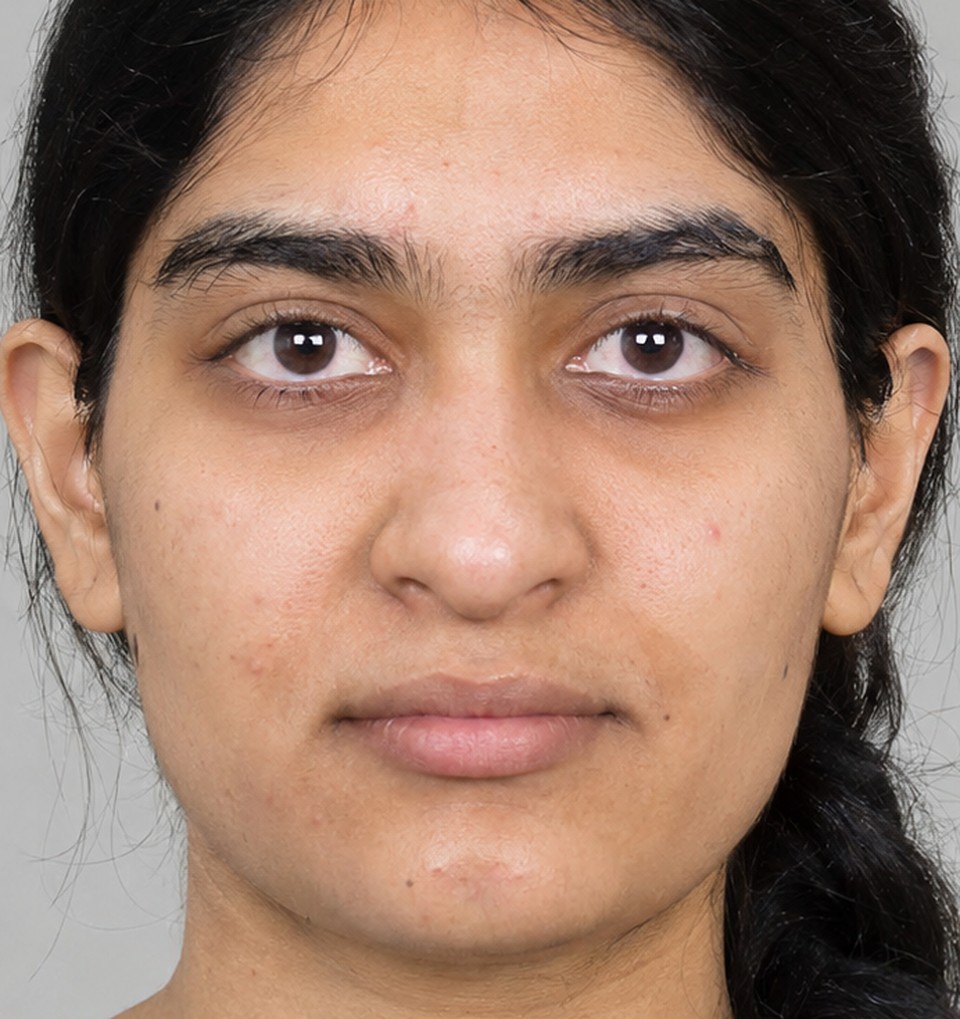
Here is our model, the baseline for this post.
Healing takes longer than you think
The nose keeps changing for a long time. Early swelling goes down over weeks. Fine swelling, especially at the tip, can take a year or more.
So the “first look” is not the final look. What matters is the shape after the tissues settle.
This is also why photos from the first few weeks are not a fair guide. Judge a nose by photos taken a year or more after the work.
After that point, the changes are slow. They come from skin, cartilage and age, not from healing.
Skin sets the pace
Skin is the covering over everything the surgeon shapes. Two noses with the same structure can look different because of it.
- Thick, oily skin: hides small edges and holds a rounded shape. It can also look heavy if the tip is made too small.
- Thin skin: shows every line and edge, and any irregularity underneath.
- Medium skin: forgiving, and the easiest to plan.
With age, skin loses firmness and thins in places. The tip and the nostril rim often show this first.
Sun matters. Daily sunscreen is dull advice, but it protects the thin skin of the bridge better than any cream.
Our model has a broad, softly rounded tip. That suggests skin on the thicker side, so a very sharp tip would be a poor match. A refined, still natural tip would suit her better.
Cartilage and support
The tip is held up by cartilage, a flexible tissue. It is strong, but it can soften and drift down slowly over decades.
A nose with strong support at the start often keeps its shape better. A nose that was weakened, or rotated a lot, needs more help from the surgeon.
That is why a surgeon talks about support. It is not a minor detail. It decides how the tip behaves for years.
Also note that cartilage can change if the nose is knocked. A strong blow to a healed nose can move it, just like any nose.
What age does to every nose
Even without surgery, noses change. The tip tends to drop a little, the bridge may look more prominent as the cheeks soften, and the skin thins.
This happens to everyone. It means a nose at 25 and at 55 are different noses, even in the same person.
A surgeon plans for that. A tip lifted very high at 25 may look overdone at 45. A tip left slightly lower, close to the person’s natural look, tends to look natural for longer.
This is an argument for the natural, gentle approach. It keeps the nose closer to what your face would do on its own.
One face, then and later
Here is an illustration on our model. The simulator first refines the nose in a natural, clearly visible way. Her bridge is prominent and her tip is wide. In the second picture the bridge line is visibly softer and the tip is clearly narrower, yet both stay in character.
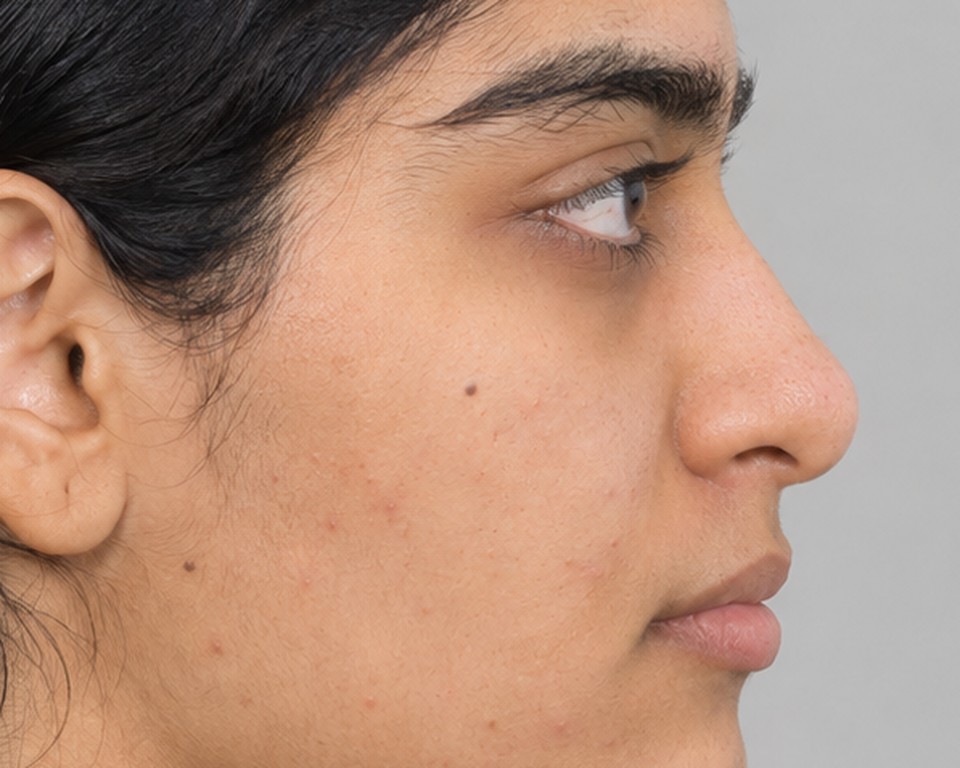
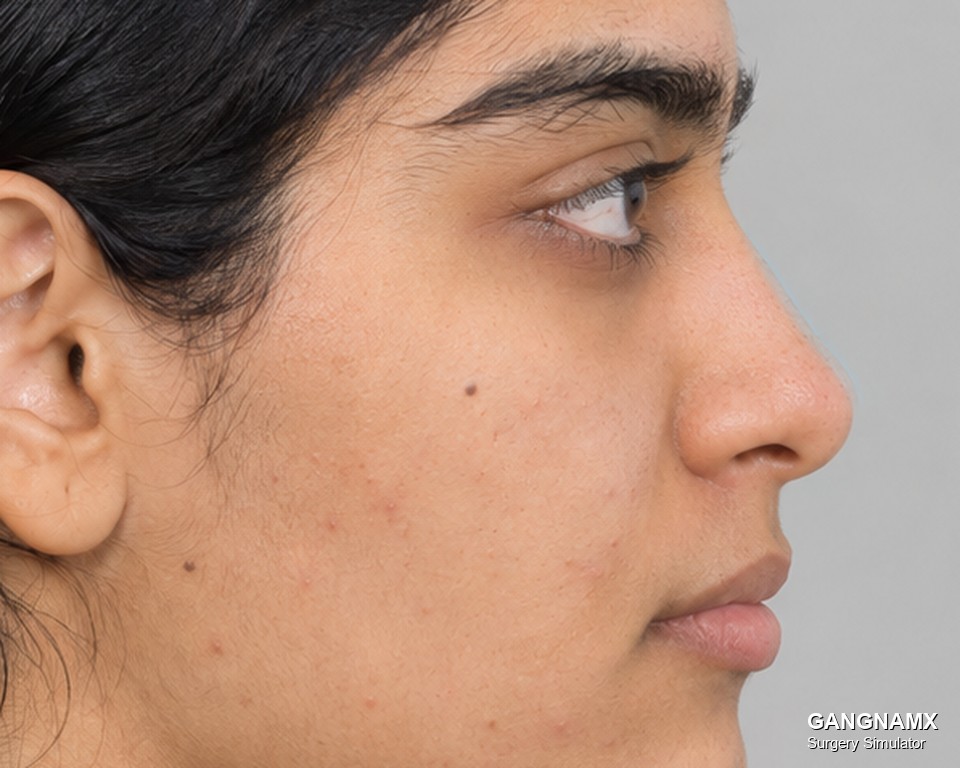
Over the years the tip of a refined nose can settle a little lower, which is a common change with time. It is slow, and in our model’s case it would be small.
Look at the angle between the nose and the upper lip. A small drop there is how ageing usually reads, and a gentle plan has an advantage. Because it starts close to the natural shape, a small drop stays natural.
Choices that tend to age well
No rule covers every face. But clinicians often mention these points.
- Keep your own proportions. The nose should belong to your eyes, lips and chin.
- Avoid extreme rotation. A very upturned tip is hard to keep.
- Support the tip. Good structure beats a perfect first photo.
- Respect your skin. Plan the shape your skin can show.
- Keep the bridge natural. Over reduced bridges can look hollow later.
Those are ideas to talk about with a surgeon, not instructions.
If a plan sounds dramatic, ask why. A good answer will mention your face, not a trend.
What to ask in a consultation
Bring questions. They show you what a clinician thinks about the long term.
- “How thick is my skin, and how will it show the shape?”
- “What support does my tip have, and what will be added?”
- “How do you expect this nose to look in ten years?”
- “Can I see results from patients with a nose like mine, a year or more after?”
- “What would you not do to my nose, and why?”
Honest answers include uncertainty. If someone promises a result will never change, be careful.
Ask also about care for the nose. Sun protection, protection from knocks and regular follow up all help.
A note on touch ups
Some people choose a second procedure years later. It might be to adjust a tip that has settled, or to smooth a small irregularity that showed with age.
That is not a sign that the first plan failed. Revision work is also more complex than a first procedure, because scar tissue and changed anatomy come into play.
For that reason, many clinicians prefer to get the first plan right and keep it modest. A conservative start leaves more options open later.
It also helps to keep your early photos and notes, front, side and from below. They give any future clinician a clear record of where you began.
Quick recap
Healing takes a year or more. Skin sets how the shape shows. Cartilage support decides how the tip behaves. Age changes every nose.
Gentle plans tend to age more calmly, because they stay close to what your face would do anyway.
Before you commit, you can look at a modest change on your own face, front and side, and think about how it will sit with you for years.
Simulation images by GangnamX.
 Plastic Surgery SimulatorYour face. Your after.Try it on you